
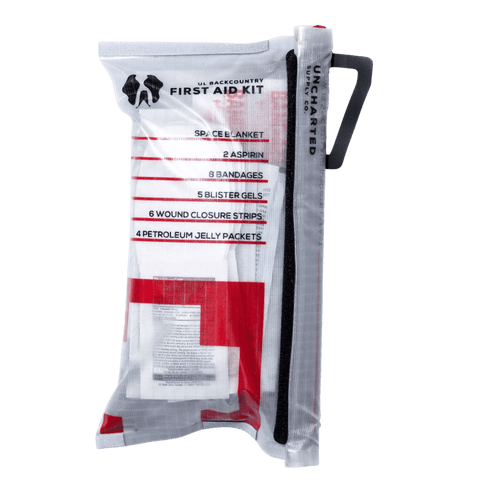
Uncharted Triage Kit
A pocket-sized first-aid and repair example.
Sold out when checked October 24, 2026.
Check Uncharted availabilityPrepper · Homestead · Sustainability Gear Price Comparison
Emergency Bags Guide
A practical approach to the bag—and the plan—for leaving home, getting back, or waiting somewhere safe. The Red Cross recommends an easy-to-carry kit for home use or evacuation.
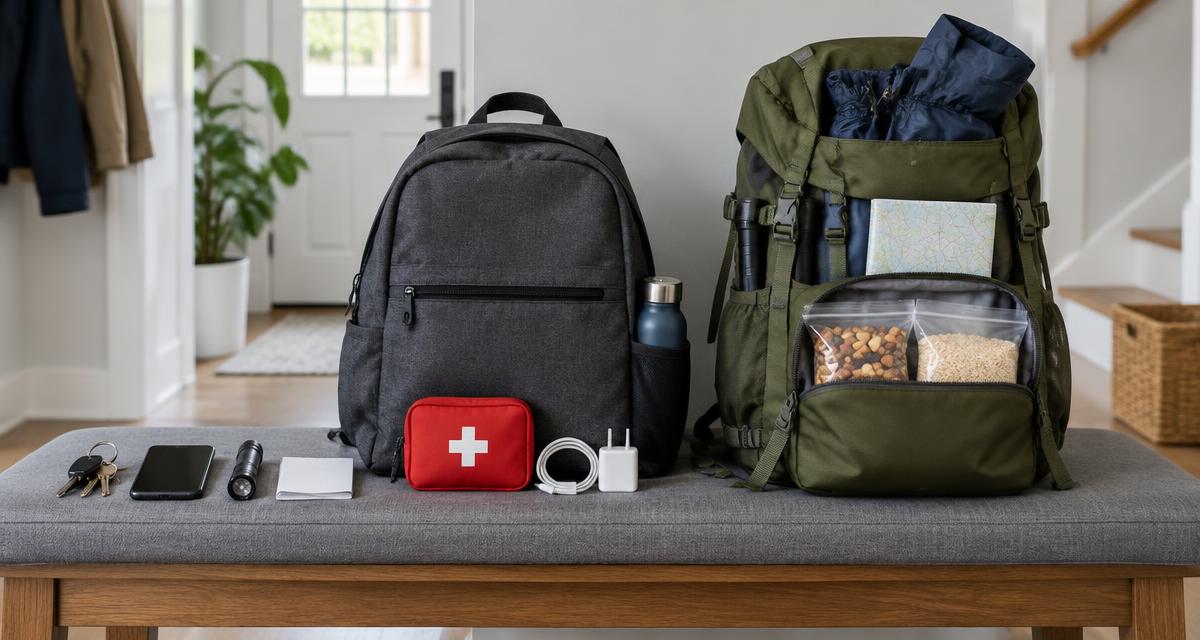
Partner examples appear alongside the checklist. Purchases through affiliate links may earn PrepFindr a commission. SkyCom links are currently untracked.
Ready.gov’s evacuation guidance includes a friend’s or family member’s home and a designated shelter—not just a remote property. Its advice is to know your destination in advance.
For this guide, “bug-out bag” means an evacuation kit. We use the familiar term without making wilderness self-sufficiency the goal; the planning reference is Ready.gov’s destination-based guidance.
Our suggested organization is three nested layers: everyday essentials, an away-from-home kit, and an evacuation kit. These names are PrepFindr’s planning framework—not an official equipment standard. The underlying agency advice is to keep supplies portable and adapt them to your household.
EDC
What you choose to keep on you
Get Home
EDC + an away-from-home supply layer
Go / Bug Out
The earlier layers + evacuation supplies
Think of the layers as an inventory structure, not a requirement to carry three separate bags. Ready.gov suggests one or two easy-to-carry containers.
Our EDC philosophy is “you are your own first responder”: prepare for the first moments of an emergency, not only a prolonged disaster. In this guide, SHTF includes a car crash or being caught in a mass shooting. The American College of Surgeons emphasizes that the person beside a bleeding victim may be the one best placed to help before responders arrive.
PrepFindr’s approach is to prepare to act: communicate, control life-threatening bleeding, and protect yourself or another person when defensive force is legally justified. The American College of Surgeons supports immediate bleeding response; Arizona’s defense-of-others statute is one example of a law recognizing justified action to protect someone else.
Preserving life is the goal. We support preparing for independent, lawful action to protect yourself and others—not treating everyone as a passive bystander. Arizona, for example, recognizes defense of a third person when the statute’s reasonable-belief and justification conditions are met. Deadly force has a higher threshold: Arizona requires an immediately necessary response to unlawful deadly force, alongside its other statutory conditions.
Know the law where you are. Check current laws in your own state and every jurisdiction you travel through—not just these examples. Arizona has no duty to retreat under § 13-405 when you may legally be there and are not engaged in an unlawful act; the justification requirements still apply. New York also recognizes defense of yourself or another person, but its deadly-force threat provision requires retreat when you know it can avoid the need for deadly force with complete safety to yourself and others, subject to statutory exceptions. Carry permissions and prohibited locations also deserve a place in your travel plan. These examples are not nationwide legal advice or a substitute for current, jurisdiction-specific guidance.
The Red Cross checklist also includes a phone and chargers, a flashlight, contact information and medical items. These complement the immediate-response layer rather than define its limits.
Uncharted’s Triage and First Aid Plus are packaged first-aid and gear-repair examples—not complete first-response EDC setups. Compare their contents with your bleeding-control plan rather than assuming they include your chosen hemostatic gauze or tourniquet.
A pocket-sized first-aid and repair example.
Sold out when checked October 24, 2026.
Check Uncharted availability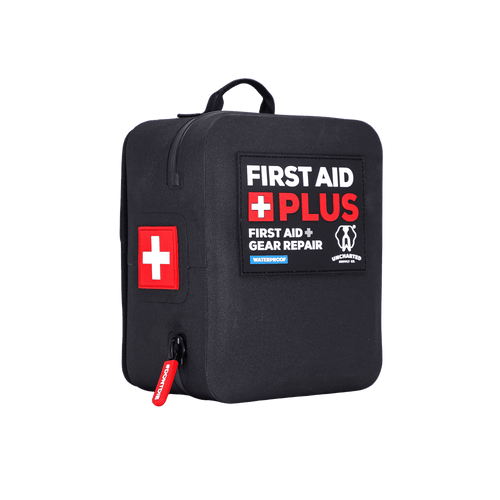
A first-aid and gear-repair kit to consider for a daily bag.
Shop UnchartedOur tourniquet shopping policy is genuine CAT, SOF-T Wide or SAM XT models from the maker or an authorized seller—not look-alikes. These models appear on the cited CoTCCC list. Refuge Medical is our medical partner; the popup below lets you inspect the listed products, not assume every kit has the same contents. Pair equipment selection with hands-on training.
For our get-home layer, use the everyday essentials as the foundation and add supplies for time away from home. “Get home” is the planning goal, not a promise that the route will be safe; flood guidance may instead call for evacuation, higher ground or staying where you are.
Before assigning this layer a place at work, in a vehicle or in a daily bag, consider your actual journey: destination, transportation arrangements and household needs. Those are the planning questions in Ready.gov’s guidance.
A walking route through floodwater is not a fallback. CDC warns against both walking and driving across flooded roads.
Build on your EDC communications. Our get-home planning questions are: who needs to hear from you, which contact details are on paper, and which radio mode will you use? Carry forward the phone, charging and contacts layer. If you add a SkyCom handheld, plan separately for cellular PTT service and permitted local UHF operation; neither replaces the weather/information receiver.
Light, charging and first aid correspond to the agency checklist. The hydration/filter example is a separate treatment option, not a replacement for the drinking-water supply; use the Water Guide to assess the source and treatment method.
Use the same communications plan as the kit grows: EDC for immediate contact, Get Home for reconnecting while away, and Go for coordinating departure and arrival. That is our application of the checklist’s phone, chargers and written contacts—not a requirement for a new radio in every bag.
SkyCom is our partner example for a dual-mode handheld you can carry through those layers. The G8 Plus and 6500 combine cellular push-to-talk with local analog UHF, according to the manufacturer. Compare their modes with the people you need to reach and the service available; retain a separate weather/information receiver.

Separate PTT buttons for cellular/network and analog UHF transmission, according to SkyCom.
View G8 Plus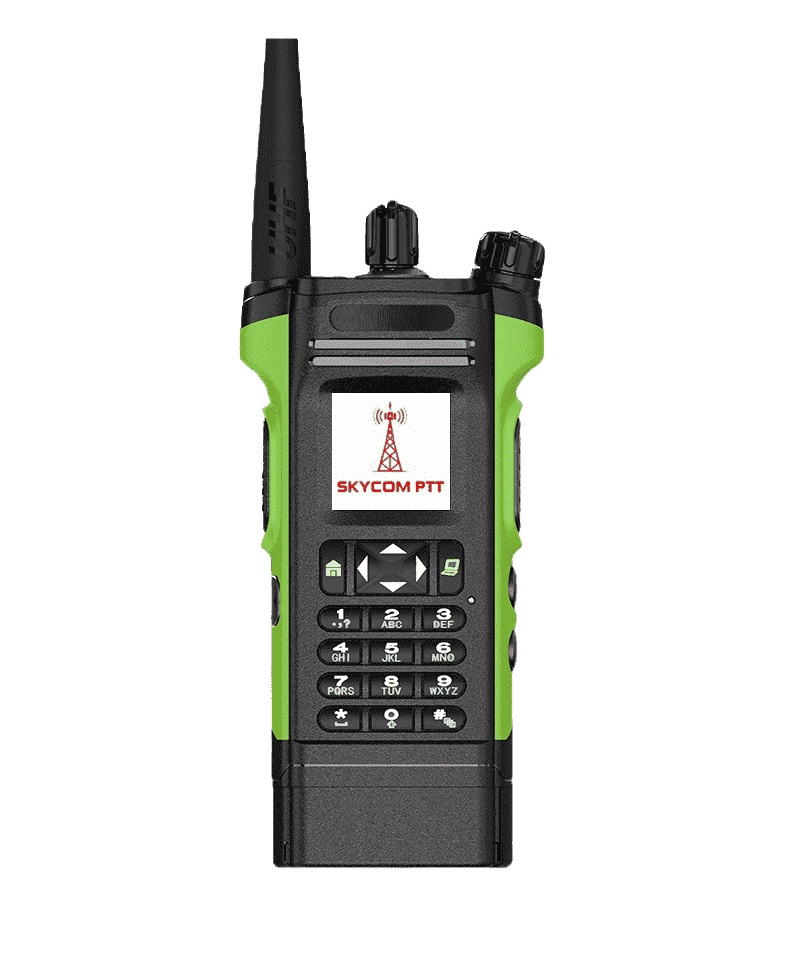
Cellular PTT plus local UHF; SkyCom also lists bridge mode between analog users and its cellular PTT group.
View 6500Coverage & licensing: cellular PTT still needs cellular/internet service. UHF operation depends on the radio’s permitted service, frequencies, certification and applicable licensing—not just its tuning range.
Comms GuideBuild on the earlier layers, then check the complete evacuation supply list. The Red Cross lists three days of water and food for evacuation, with a seven-day supply of medications.
The Red Cross water target works out to three gallons per person for three days: 1 gallon × 3 days = 3 gallons. That is the supply target—not a statement that everyone should carry it in one pack. Both Red Cross and Ready.gov emphasize easy-to-carry containers.
For your plan, separate what you could take by hand from additional supplies you could transport in a vehicle. If a car is not available, arrange transportation assistance rather than treating every supply as a walking load.
For water-source and treatment questions, see the Water Guide. The Red Cross evacuation checklist calls for a drinking-water supply.
Carry the communications plan forward. Our go-layer worksheet pairs the destination and backup with written contacts, phone charging and the two-way radio already selected for EDC/Get Home. Include a service-unavailable option in that plan: SkyCom warns that cellular PTT needs cellular/internet service, while UHF operation must fit the applicable radio rules.
Compare the Uncharted systems below with the checklist rather than treating a pre-made bag as a complete household plan. The agency list also includes medications, personal documents and unique family needs.
Refuge Medical’s BEARFAK is a partner trauma-kit example. Keep the ordinary first-aid kit on your checklist rather than treating specialized equipment as the whole medical plan.
This planning worksheet is aimed at an apartment, a suburban home or a workplace—not only a rural retreat. Ready.gov’s options include friends, family and a designated shelter, and its guidance addresses people without cars.
These are example households, not predictions. Use their questions to fill in your own destination, transport and personal-needs plan.
Example: a renter plans to stay with a relative, with a designated shelter as the backup. Their worksheet separates EDC and a portable bag from extra supplies that require transport. Which destination is available, where are the document copies and medications, and can the chosen containers actually leave with them?
Example: a commuter away from home has arranged help from a friend and checked local government assistance. Their worksheet records the contact, intended destination and portable supplies; it does not assume walking home is always possible. What happens if the friend cannot help? Ready.gov recommends arranging transportation before an evacuation; CDC warns against walking across flooded roads.
Example: a suburban household checks a relative’s availability and pet arrangements before relying on that destination. Its worksheet assigns the child’s supplies, medications, document copies and the pet’s carrier, food and identification to the evacuation load. Who carries each item, and what is the backup if the destination cannot accept the pet?
There is no single bag-based answer to “should I leave?” Ready.gov’s flood guidance includes different actions for different circumstances; CDC says never to ignore an evacuation order. Treat local, hazard-specific instructions as the decision point—not whether your bag is finished.
Red Cross warns that shortcuts may be blocked. Flooded roads must not be crossed on foot or by car, according to CDC. Route planning should leave room for official changes rather than depend on one improvised shortcut.
Know the intended destination and check arrangements before relying on it. Ready.gov specifically notes that many shelters and hotels do not allow pets; the kit does not resolve that limitation.
The Red Cross pairs multi-day supply targets with an easy-to-carry kit. Our approach is to organize essentials and additional transportable supplies separately, with household needs and transportation assistance in the plan—not to prescribe one pack weight for everyone.
Ready.gov asks households to consider unique needs, including pets and seniors. Use the shared checklist as a starting point, then account for each person.
CDC recommends reviewing your needs every year and updating the kit as your family’s needs change.
Affiliate disclosure: purchases through partner links may earn PrepFindr a commission.